
Rituals, Grain Spirits, and the Quiet Dread of the Harvest
Walking Among the Sheaves
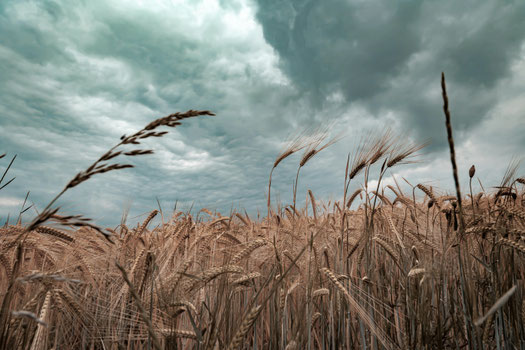
It is late September, and the sun dips low over a field of ripened rye. A German farmer ties the last sheaf, the stalks golden-brown in the fading light. Every motion is deliberate — the harvest is almost done, and with it, the year’s survival depends. There is a hush in the field, a sense that the land itself is watching. Not in a fanciful way, but in the calm, attentive way a place remembers every step, every cut, every care.
For centuries, farmers here knew that the harvest was not just work — it was communion. Each bundle of grain held more than nourishment. It carried the presence of the Roggenmuhme, the Corn Mother, or Kornmutter, a spirit bound to the life of the crop. The last sheaf, in particular, was sacred. Scholars like Wilhelm Mannhardt recorded the care with which these final stalks were cut, tied, and sometimes fashioned into a small doll. It was a vessel of the field’s memory and, in a sense, the soul of the harvest itself.
The Reality of Farming in the 1800s
Life depended on the harvest. Rye, barley, oats, and potatoes were essential. A failed crop could mean weeks of hunger. There were no insurance policies, no state support, no certainty. Farmers watched the skies, read the clouds, and listened to their land. Rituals, offerings, and protective gestures were practical as well as symbolic.
Even minor misfortune — a sudden frost, a blighted stalk, a cow gone astray — could tip the balance. Folklore grew alongside necessity: stories, omens, and the careful preservation of tradition were ways to cope with uncertainty.
The Grain Spirit: Roggenmuhme
The Roggenmuhme, sometimes imagined as an old woman dressed in stalks, lived within the final sheaf. She represented the harvest’s continuity. Farmers left small offerings of bread or milk, acknowledging her presence and asking for her blessing on the next year. Neglect or disrespect could bring misfortune — a failed crop or illness in livestock.
Jacob Grimm and Mannhardt noted these practices throughout rural Germany in the 19th century. The last person to finish reaping was sometimes teased as “having the Old Woman,” a lighthearted warning not to anger the spirit. These practices were practical, moral, protective, and a way to maintain order amid uncertainty.
Boundaries and Protection
Field edges were treated with care. Iron stakes or implements might be buried at corners. Certain days were avoided for ploughing, lest the Roggenmuhme be angered. Farmers observed omens in the sky, the wind, or the animals. This was not superstition for amusement; it was attentive, grounded survival. The land “remembered” care, disrespect, and intention.
Fear, Morality, and the Land
Rural folklore served a dual purpose: it protected crops and reinforced ethical behavior. Greedy or neglectful farmers risked misfortune. The land, in a sense, acted as both guardian and judge. Mannhardt described these beliefs as a mix of practical caution and moral order, showing how folklore shaped everyday life.
Here, fear was not entertainment. It was the tension of existence. Every blade of grain, every shadow at the edge of the field, was a reminder that life and death were intimately entwined with the land.
Listening to the Fields Today
Reading about these traditions, it’s clear that fields were far from passive. They were alive with expectation, memory, and an underlying authority. The Roggenmuhme, the last sheaf, the careful observances of the farmers — all of it reminds us that attention matters. Whether in fiction or daily life, noticing the small, subtle forces around us can shape outcomes in ways both literal and imaginative.
I’ve been studying these traditions closely lately. The more I read, the more I sense that the old stories are not just quaint tales; they are a guide to seeing the world as attentive, responsive, and sometimes demanding respect.
Next time, we will turn to Cornwall, where coastal winds, rocky fields, and piskies leave their mark on agrarian life. The contrast is fascinating, and the rituals equally rich — though harsher, more exposed, and yet grounded in similar needs for protection and attentiveness.
If reading this makes you think about the spaces you live in, how they respond to care and attention, or the unseen life of a home, you can learn more about my House Healing work here: HOUSE HEALING SERVICES
With care and lantern lit,
Blossom
Write a comment